Akita Life Expectancy and Age Calculator
Dignified, loyal, and famous the world over — here's how an Akita's age converts to human years.
How long do Akitas live?
A typical UK life expectancy for the Akita is a median of about 11.4 years, from a 2024 analysis of UK dog records by Dogs Trust. That figure also includes dogs recorded as Japanese Akita Inu and American Akita. The median is a midpoint from those records, not a guarantee that a dog will reach it or stop there.
In that study, larger dogs tended to have shorter lives than smaller ones, and flat-faced breeds shorter lives than dogs with a typical head shape. Signs your dog is a senior covers what to watch for as a dog gets older.
Source: Dogs Trust, longevity of UK dog breeds (2024), reporting McMillan et al., Scientific Reports.
Akita age in human years
| Dog years | Human years | Life stage |
|---|---|---|
| 1 | 15 | Adolescent |
| 2 | 24 | Adult |
| 3 | 28 | Adult |
| 4 | 32 | Adult |
| 5 | 36 | Senior begins |
| 7 | 50 | Senior |
| 8 | 55 | Senior |
| 10 | 66 | Senior |
| 12 | 77 | Geriatric |
| 13 | 82 | Geriatric |
Figures based on The Royal Kennel Club's published large-breed guidance, as tabulated by Purina UK. The same numbers power the widget above and the main calculator with Akita selected at 5 years. Want an exact figure including months? Use a decimal age in the widget (for example 7.5) or open the full calculator.
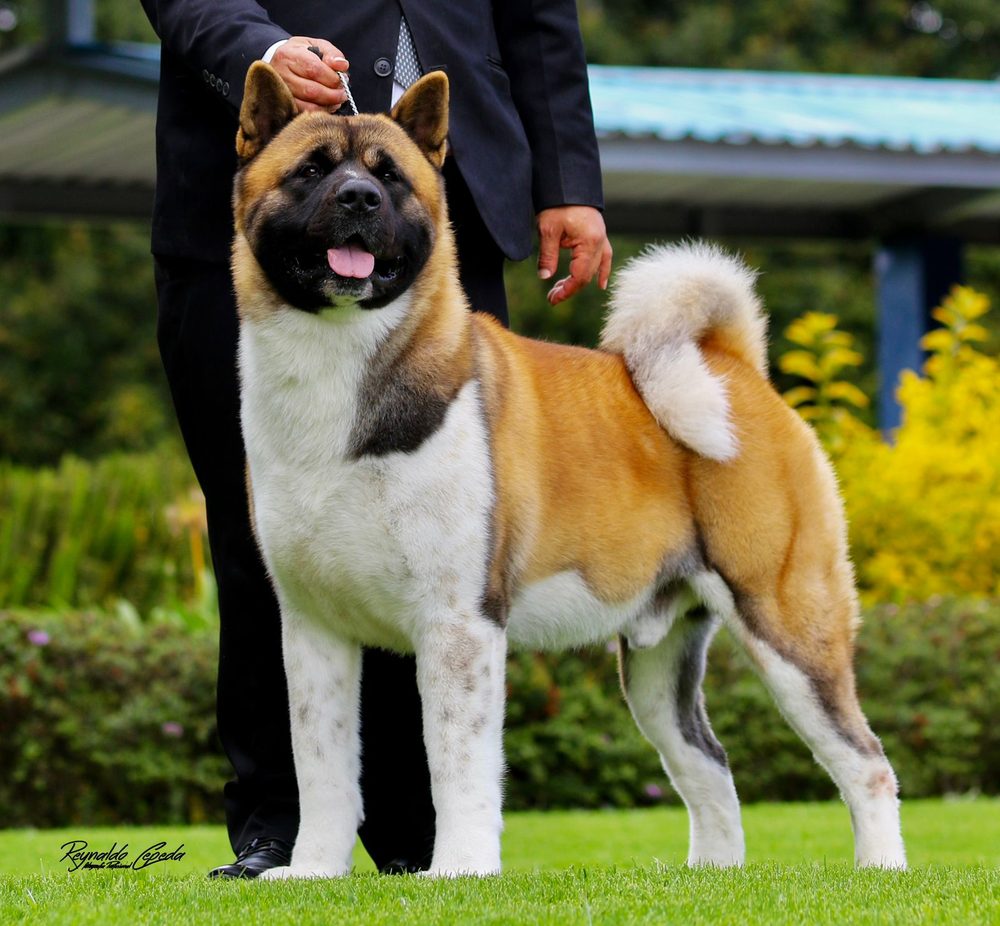
The Akita is classified by The Royal Kennel Club as a large breed, typically weighing 32–45 kg as an adult, with a median life expectancy of around 11.4 years, according to a 2024 analysis of UK veterinary records by Dogs Trust. Originally bred in Japan for hunting large game and guarding, and famous worldwide for the story of the loyal dog Hachikō, the Akita is dignified, courageous, and deeply devoted to its family.
That 11.4-year median is a midpoint from real UK clinical records — not a guarantee, and not a maximum. Plenty of dogs live a bit shorter or longer; the chart above is for converting the years you already have, not predicting the years still to come. Larger breeds tend to reach adulthood and old age faster than smaller ones. A 7-year-old Akita is about 50 in human years on the Royal Kennel Club large-breed table; a 7-year-old small breed is still in middle age on the small-breed table. See small vs large breed ageing for why size changes the maths.
Worked examples using this site's calculator
These are the same Royal Kennel Club large-breed figures the homepage uses — not a separate formula. The classic ×7 rule is shown only as a comparison; it is the rule this site exists to replace. More on that in Is the ×7 rule real?
| Your Akita | RKC human years | ×7 rule | What that stage usually means |
|---|---|---|---|
| 3 years | 28 | 21 | Adult — ×7 understates the early years |
| 5 years | 36 | 35 | Senior begins on the large-breed table |
| 7 years | 50 | 49 | Solidly senior; ×7 is briefly close |
| 10 years | 66 | 70 | ×7 starts to overstate |
| 11 years | 72 | 77 | Around the Dogs Trust median lifespan |
Open the full calculator at 5 years, Akita already selected, or pick another age on this page. Birth-date entry, named results, and the share card live on the homepage, not in this widget.
What this means for your Akita
Hip and elbow dysplasia are relatively common in the breed given its substantial size, so watch for stiffness or reluctance to exercise as your Akita ages. The breed can also be prone to autoimmune conditions affecting the skin and thyroid, so any unexplained skin changes are worth a vet visit.
Bloat (gastric dilatation-volvulus), a life-threatening twisting of the stomach, is a particular risk for deep-chested large breeds like the Akita — knowing the warning signs (a swollen abdomen, unproductive retching, restlessness) and seeking emergency care immediately can be lifesaving.
None of that is a diagnosis, and this page is not a substitute for your vet. The useful takeaway is practical: twice-yearly check-ups from around 5 dog years, a monthly look at body condition, and catching sudden changes early. That is the unglamorous version of healthy ageing.
When is an Akita considered a senior?
Under The Royal Kennel Club's size-adjusted guidance, large breeds like the Akita are generally considered senior from around 5 dog years old.
5 dog years maps to about 36 human years on the large-breed table. By 7 (about 50), many owners notice a slower rise from the bed and a shorter stride on the second walk. Gradual change is common; sudden lameness, rapid weight loss, or a new lump is the point to read when to take your senior dog to the vet rather than wait for the next routine slot.
Insurers do not have to use the same "senior from 5" line. An 5-year-old Akita is already in the senior life stage on this site, but a given UK insurer may still treat that dog as mid-life for a new quote — or may already apply a higher excess. If you are weighing cover, read pet insurance for older dogs alongside this chart rather than assuming the two clocks match.
How Akitas compare with other large UK favourites
On this site Akitas share the large band with Siberian Husky and Alaskan Malamute, so the year-by-year human-years numbers are the same. The differences we do publish are lifespan midpoints from that same 2024 Dogs Trust UK veterinary analysis: about 11.9 for Siberian Husky, and about 11.3 for Alaskan Malamute. Those are medians, not targets.
If you have two of those breeds at home, the breed comparison tool puts the ageing tables next to each other. It will not invent a different curve than the size-band maths already on each page.
Common questions
How long do Akitas live?
A typical UK life expectancy for the Akita is a median of about 11.4 years, from a 2024 analysis of UK dog records by Dogs Trust. That figure also includes dogs recorded as Japanese Akita Inu and American Akita. The median is a midpoint from those records, not a guarantee that a dog will reach it or stop there.
In that study, larger dogs tended to have shorter lives than smaller ones, and flat-faced breeds shorter lives than dogs with a typical head shape. Signs your dog is a senior covers what to watch for as a dog gets older.
Source: Dogs Trust, longevity of UK dog breeds (2024), reporting McMillan et al., Scientific Reports.
How old is an 5-year-old Akita in human years?
About 36, using The Royal Kennel Club's large-breed guidance as tabulated by Purina UK. That is also the point this site treats as the start of the senior stage for Akitas. The ×7 rule would say 35 — close at some ages, then it drifts.
Why does an Akita count as senior earlier than a small dog?
Large breeds reach old age faster than small ones on the Royal Kennel Club tables this site uses. Small breeds are generally treated as senior from around 10 dog years; Akitas from around 5. It is a size-band guideline for care and check-ups, not a switch that flips overnight. See dog life stages explained.
Can I pre-fill the main calculator with Akita?
Yes. The homepage applies a shared link when an age is present, so use Akita at 5 years or 7 years, then change the age if you need a different figure. The widget on this page is the same large-breed maths in a shorter form.
Get the exact figure, to the month
Opens the homepage calculator with Akita selected at 5 years — the start of the senior stage on the large-breed table. Change the age for your own dog.
Open the Akita calculatorRelated reading: Is the ×7 Rule Real? · Dog Life Stages Explained · Caring for an Ageing Dog · Pet Insurance for Older Dogs
Compare: vs Siberian Husky · vs Alaskan Malamute · vs German Shepherd Dog
Parasite protectionAd
VetBox delivers monthly flea, tick and worm treatment to your door — one less thing to remember.
Check VetBox plans