Alaskan Malamute Age Calculator: Dog Years to Human Years
Built for endurance, not speed — here's how an Alaskan Malamute's age converts to human years.
Alaskan Malamute age in human years
| Dog years | Human years | Life stage |
|---|---|---|
| 1 | 15 | Adolescent |
| 2 | 24 | Adult |
| 4 | 32 | Adult |
| 5 | 36 | Senior begins |
| 8 | 55 | Senior |
| 12 | 77 | Geriatric |
Figures based on The Royal Kennel Club's published large-breed guidance, as tabulated by Purina UK. For an exact figure, try the Dog Years calculator.
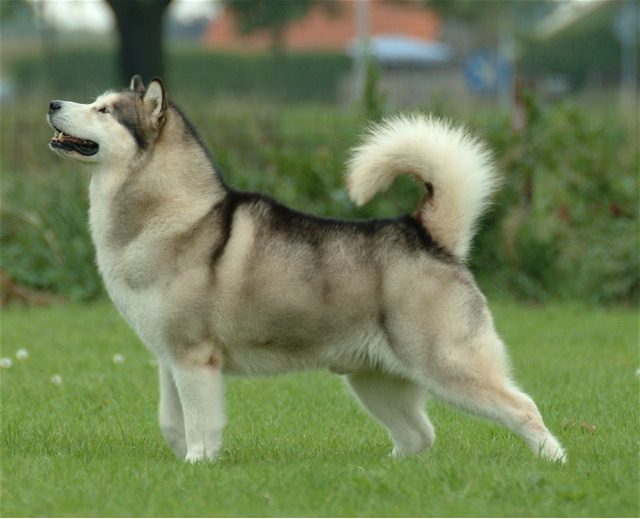
The Alaskan Malamute is classified by The Royal Kennel Club as a large breed, typically weighing 34–39 kg as an adult, with a median life expectancy of around 11.3 years, according to a 2024 analysis of UK veterinary records by Dogs Trust. Developed by the Mahlemut Iñupiat people of Alaska to haul heavy freight over long distances, the Alaskan Malamute is a powerful, friendly, and highly sociable working breed built for endurance rather than speed.
What this means for your Alaskan Malamute
Hip dysplasia and a range of inherited eye conditions, including cataracts, are seen in the breed, so regular joint and eye checks become more important as your Malamute ages. The dense double coat also needs regular brushing, especially during seasonal "blowing" of the undercoat.
Malamutes can be prone to hypothyroidism and a rare inherited condition called polyneuropathy, which affects nerve and muscle function — any unexplained weakness, exercise intolerance, or change in gait is worth discussing with your vet.
When is an Alaskan Malamute considered a senior?
Under The Royal Kennel Club's size-adjusted guidance, large breeds like the Alaskan Malamute are generally considered senior from around 5 dog years old.
Related reading: Is the ×7 Rule Real? · Dog Life Stages Explained · Caring for an Ageing Dog
Compare: vs Siberian Husky · vs Akita · vs Newfoundland
Parasite protectionAd
VetBox delivers monthly flea, tick and worm treatment to your door — one less thing to remember.
Check VetBox plans